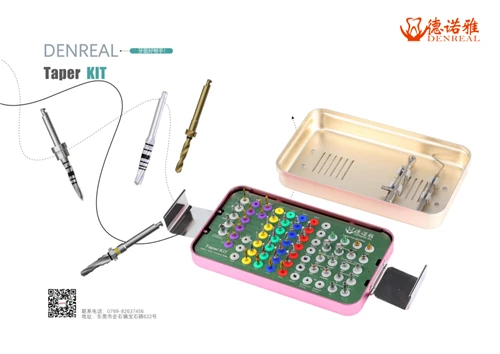
Dental accessories are indispensable tools and materials in oral medical diagnosis, treatment, and restoration. They are characterized by diverse structures, specialized functions, and high biocompatibility requirements, and are widely used in clinical settings such as diagnosis, treatment, restoration, and orthodontics.
Based on function and usage, dental accessories can be categorized as follows:
1. Dental Instruments: Mostly manual or mechanically driven tools, requiring no electricity and reusable.
Common types include probes, tweezers, scalers, extraction forceps, and burs.
Used for examination, cleaning, excision, and restoration, emphasizing precision and durability.
2. Dental Materials: These are disposable consumables used directly for tooth restoration or tissue treatment.
Includes composite resin (for fillings), glass ionomer cement (for children/sensitive teeth), impression materials (for taking impressions), adhesives, and root canal filling materials.
High requirements are placed on biocompatibility, strength, and aesthetics.
3. Implant and Restorative Components
Implants, abutments, healing caps, screws, crowns, etc., constitute the core components of a dental implant system.
Each component must be precisely matched to ensure long-term stability and restoration of chewing function.
4. Orthodontic Components
These include brackets, archwires, ligatures, traction hooks, mini-implants, etc.
Through mechanical control, these guide tooth movement to achieve goals such as alignment, closing gaps, and adjusting occlusion.