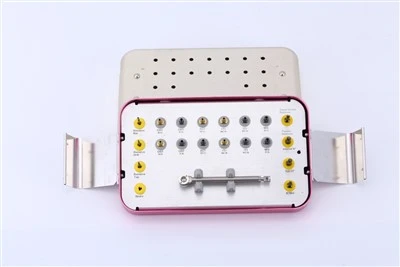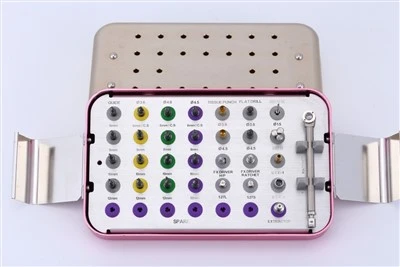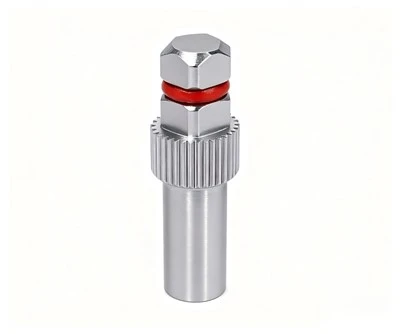

Precision-engineered prosthetic interfaces for implant-supported dental restorations. Milled from certified medical-grade titanium alloy with strict dimensional control to ensure a secure, micro-gap-free connection at the implant platform level.
Technical Specifications
|
Parameter |
Specification |
|
Material Composition |
Titanium Grade 5 ELI (Ti-6Al-4V ELI), conforming to ASTM F136 and ISO 5832-3 |
|
Platform Compatibility |
Compatible with major implant systems (Nobel Biocare, Straumann, Zimmer Biomet, Osstem, Dentsply SImplant, etc.) |
|
Connection Type |
Internal hex, external hex, conical connection, and tri-channel options |
|
Collar Heights |
Available in 0.5 mm, 1.0 mm, 2.0 mm, and 3.0 mm configurations |
|
Surface Finish |
Grit-blasted bonding cylinder (Ra 1.2-1.8 um) for high retention with resin cements and adhesive caps |
|
Dimensional Tolerance |
plus-minus 0.005 mm on critical interface connections |
|
Delivery State |
Non-sterile; suitable for autoclave sterilization prior to clinical application |
Material & Manufacturing Process
Raw Material Verification
All components are machined from certified Grade 5 Ti-6Al-4V ELI (Extra Low Interstitial) bar stock. Incoming materials undergo positive material identification (PMI) and metallurgical testing to guarantee biocompatibility, high tensile strength, and resistance to cyclic fatigue.
High-Precision Machining
Produced on multi-axis Swiss-type CNC turning centers with live tooling. Critical interface dimensions-including anti-rotation indexes, screw access channels, and implant platform mating surfaces-are controlled within plus-minus 0.005 mm, ensuring uniform stress distribution and preventing screw loosening under masticatory loads.
Surface Texturing
The upper bonding zone undergoes controlled micro-blasting to optimize surface energy and mechanical interlocking. The emergence profile is precision-polished to support stable soft-tissue attachment and minimize plaque accumulation.
Clinical Indications & Restorative Scope
Designed for precision prosthetic reconstructions within digital dental workflows:
Restoration Types: Suitable for single-unit and multi-unit screw-retained or cement-retained restorations (including crowns and bridges).
Anatomical Placement: Applicable for both anterior and posterior regions, subject to the chosen platform diameter and crown emergence profile requirements.
Angle Correction Support: Compatible with angled screw channel (ASC) solutions where applicable, allowing screw access channel correction up to specific degrees for aesthetic optimization.
Quality Control & Regulatory Compliance
Operations adhere to ISO 13485:2016 quality management standards. Production lots are subject to strict verification protocols:
100% Dimensional Inspection: Automated optical and coordinate measuring machines (CMM) inspect connection geometry and screw seat tolerances for every lot.
Fatigue Resistance: Representative samples undergo dynamic fatigue testing per ISO 14801 to simulate long-term masticatory performance.
Cleanliness Standard: Post-machining ultrasonic cleaning in purified water lines eliminates organic residues, machining oils, and particulate debris.
Sterilization & Handling Guidelines
To ensure patient safety and compliance with clinical infection control standards:
Initial State: Components are delivered non-sterile. Ultrasonic cleaning and thorough inspection are recommended before laboratory processing or clinical trial fitting.
Autoclave Sterilization: Prior to clinical placement or intraoral try-in, components must undergo steam sterilization according to standard medical protocols (e.g., steam sterilization at 134 degrees Celsius for 3 to 18 minutes, depending on local institutional guidelines).
Single-Use Policy: Prosthetic screws are precision-engineered for single-patient use to maintain optimal preload retention and prevent fatigue failure. Titanium bases are intended for permanent prosthetic integration.
Traceability & Packaging Specifications
Laser Marking: Each titanium base is laser-marked with a unique lot number and platform identifier for complete traceability.
Cleanroom Packaging: Packed individually in clean, anti-static blister packs to prevent transit damage and surface contamination.
Regulatory Labeling: Labels include material specification, lot code, REF number, and compliance symbols ready for clinical or lab inventory management.
FAQ
Hot Tags: dental ti base abutment, China dental ti base abutment manufacturers, suppliers, dental implant bar, Dental Implant Cover Screw Wholesale, Dental Ti Base, dentium cover screw, nobel closed tray impression, straumann ti base