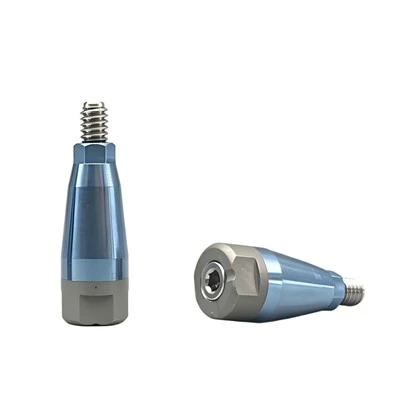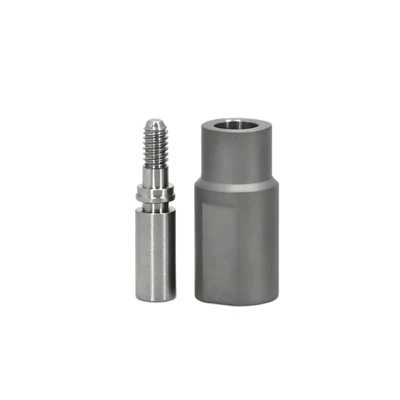

A Rotational Ti Base Abutment serves as the stable titanium connection between a dental implant fixture and a CAD/CAM-manufactured superstructure. Designed for precision, these components accommodate individual anatomical variations while ensuring a reliable restorative foundation.
Selecting the correct component requires careful verification of connection geometry, platform dimensions, rotational configurations, and digital design parameters.
Technical Specifications & System Compatibility
|
Parameter |
Specification Standard |
|
Product Type |
Rotational Ti Base Abutment (Engaging / Non-Engaging Options) |
|
Material Composition |
Titanium Grade 5 (ELI / Ti-6Al-4V ELI per ASTM F136 / ISO 5832-3) |
|
Implant Compatibility |
Compatible with major international implant connection systems |
|
Platform Options |
Narrow (NP), Regular (RP), Wide (WP) - System-specific |
|
Base & Gingival Heights |
Engineered in multiple vertical dimensions per catalog drawings |
|
Fixation Hardware |
Matching prosthetic retention screw included |
|
Driver Interface |
Standardized hexagonal or proprietary system-matched geometry |
|
Quality Standard |
Manufactured under strict medical device quality management systems |
Core Applications
CAD/CAM Screw-Retained Restorations: Acts as the base for digitally designed custom abutments, hybrid structures, and single-unit or multi-unit screw-retained crowns.
Prosthetic Component Inventories: Ideal for stocking standardized connection interfaces, ensuring repeatable laboratory workflows and reliable long-term clinical performance.
Custom Restorative Solutions: Adaptable for specialized restorative profiles when verified through technical drawings and engineering review.
Digital Integration & Workflow
Modern dental restorations rely heavily on precise digital accuracy. This component is fully supported by open and closed digital ecosystems:
CAD/CAM Libraries: Official component libraries (including 3Shape, exocad, and Dental Wings) are available to ensure accurate virtual seating, correct emergence profiles, and reliable milling parameters.
Machining Tolerance Control: Critical connection interfaces are CNC-machined to tight tolerances, ensuring a secure, micro-gap-minimized connection to the implant fixture.
Step-by-Step Selection Guide
Identify Implant System: Confirm the exact manufacturer, implant line, connection type, and platform diameter. Visually similar geometries are not interchangeable.
Verify Rotational Design: Determine whether the clinical case requires a rotational or anti-rotational configuration to prevent movement under functional load.
Evaluate Restorative Space: Assess vertical clearance, gingival height, and screw access channel angles before finalizing the virtual design.
Confirm Screw Compatibility: Match the precise thread pitch, head seating angle, and recommended tightening torque.
Review Technical Documentation: Always cross-reference the official product drawing and material specifications to ensure regulatory and clinical compliance.
Quality Assurance & Material Verification
Raw Material Integrity: Fabricated from certified medical-grade titanium, ensuring excellent biocompatibility and mechanical strength.
Precision Inspection: Critical mating surfaces undergo strict dimensional and optical inspection to guarantee rotational stability and structural fit.
Traceability: Each component is laser-marked with clear lot identification to ensure full batch tracking from raw material to final delivery.
FAQ
Hot Tags: rotational ti base abutment, China rotational ti base abutment manufacturers, suppliers, biohorizons angled screw chan, Dental Implant Cover Screw Wholesale, Dental Pre Milled Abutment, Dental Ti Base, implant impression coping, open tray transfer coping