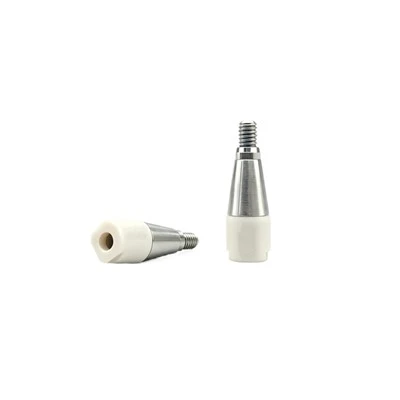

Zirconia implant abutments are precision-machined prosthetic components that connect dental implants to upper restorative superstructures. They are applied in clinical workflows where ceramic color stability, transmucosal esthetics, and metal-free emergence profiles are required.
For implant system manufacturers, global distributors, dental laboratories, and OEM/ODM brands, successful procurement depends on verifying implant connection geometry, restorative dimensions, material grades, and lot-level traceability.
Technical Specifications Summary
|
Specification Parameter |
Standard Technical Parameters to Confirm |
|
Product Category |
One-piece zirconia or titanium-base hybrid |
|
Compatible Implant System |
OEM manufacturer, product family, and connection type |
|
Platform Size |
Platform diameter (e.g., NP, RP, WP) and interface dimensions |
|
Restorative Profile |
Gingival height, emergence profile, and total height |
|
Material Composition |
Y-TZP Zirconia; Titanium Grade 5 (ELI) for titanium bases |
|
Screw & Torque |
Compatible abutment screw reference and torque specification |
|
Quality & Traceability |
Lot identification, dimensional inspection reports, and raw material certification |
Product Configurations and Structural Types
Zirconia abutments are not universal components. Their structural integrity, retention mechanism, and application scope depend on the specific construction:
One-Piece Zirconia Abutments: Machined as a single monolithic ceramic component. Utilized where restorative space and wall thickness meet the mechanical requirements specified for the implant connection and screw-retention design.
Titanium-Base Hybrid Abutments: Integrates a CAD/CAM-milled zirconia restorative component bonded to a prefabricated titanium base. This design combines ceramic esthetics at the emergence profile with the mechanical stability of a metal-to-metal implant interface.
How to Select the Right Zirconia Implant Abutment
Identify the Implant System: Provide the exact implant brand, product family, platform diameter, and connection type. If reference numbers are unavailable, submit a technical drawing or a verified interface profile. Visual similarity alone is insufficient to establish compatibility.
Determine the Abutment Structure: Specify whether the application requires a monolithic one-piece zirconia design or a titanium-base hybrid configuration.
Verify Restorative Dimensions: Define gingival height, margin placement, angulation, and occlusal space based on laboratory CAD design files.
Confirm Assembly Hardware: Verify that the designated abutment screw, prosthetic screw, and tightening instruments correspond to the system specification.
Review Documentation Package: Request material data sheets, dimensional inspection reports, and applicable regulatory compliance files for your target market.
Typical Application Scenarios
Zirconia implant abutments are evaluated for specific restorative workflows requiring high esthetic precision:
Anterior Restorations: Single-tooth restorations in the esthetic zone where metal margins would compromise soft-tissue translucency, subject to the abutment's specified indications.
Digital Restorative Workflows: CAD/CAM-designed custom abutments supported by validated scanning, milling, and manufacturing processes.
Dental Laboratory and Distributor Supply: Bulk procurement of catalog-standard abutments requiring clearly identified product references, compatibility records, and repeatable specifications.
Note: Actual indications depend on specific product design, manufacturer instructions, and applicable clinical requirements.
Manufacturing & Quality Requirements
Material Control: Material identification, supplier documentation, and traceability to the extent required by the buyer's quality system.
Dimensional Inspection: Inspection criteria for critical dimensions, implant-interface geometry, and other specified features.
Surface and Finishing Control: Acceptance criteria for surface condition, machining marks, edge quality, and product-specific finishing requirements.
Assembly and Interface Verification: For hybrid abutments, titanium-base interface evaluation, bonding process requirements, and assembly or inspection records.
Batch Identification and Documentation: Product labeling, lot traceability, and specification revision control.
Frequently Asked Questions
Hot Tags: zirconia implant abutment, China zirconia implant abutment manufacturers, suppliers, Dental Straight Abutments, healing screw dental implants, implant crown, NEO Straight Abutments, open tray impression steps, Screw-Retained Temporary Abutment