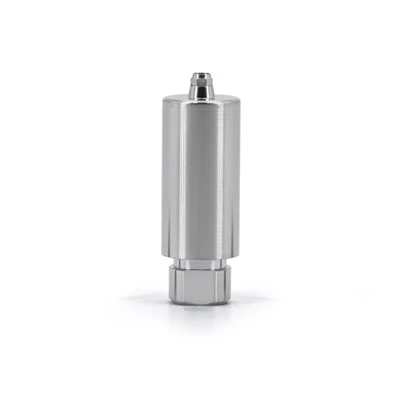

A low-profile healing abutment connects directly to the dental implant fixture, establishing an optimal emergence profile and supporting soft-tissue healing. The reduced vertical profile is specifically engineered for clinical cases involving limited vertical clearance.
Specification Matrix
|
Specification Parameter |
Standard Verification Detail |
|
Product Type |
Low Profile Healing Abutment |
|
Implant Compatibility |
Platform, connection type, and internal indexing geometry |
|
Gingival Height |
Available metric options |
|
Abutment Diameter |
Profile options matching specific platform requirements |
|
Material Grade |
Medical-grade alloy designation |
|
Surface Treatment |
Controlled finish tailored for soft-tissue response |
|
Retaining Screw |
Included or supplied separately (specify configuration) |
|
Driver Interface |
Compatible hex, torx, or proprietary driver type |
|
Traceability |
Lot-controlled manufacturing with inspection documentation |
Key Selection & Engineering Criteria
Low-Profile Geometry for Limited Space
Designed for clinical scenarios where vertical clearance is restricted. Selection should always be based on comprehensive dimensional analysis (gingival height, diameter, and contour) rather than generic product nomenclature.
Strict Implant Connection Compatibility
Component compatibility is critical. Visually similar components can possess microscopic variations in interface geometry, internal indexing, thread pitch, or seating depths.
Material & Surface Quality
Material composition and surface characteristics directly impact osseointegration environment compatibility, cleaning protocols, and regulatory qualification. Full material designations and technical data sheets are available upon request to support your auditing process.
Screw & Driver Configuration
Retaining screws and driver interfaces must precisely match the internal geometry of the component. Verify screw inclusion, thread specifications, and compatible driver types before finalizing your purchase order.
Clinical Applications
These low-profile healing abutments are utilized across diverse restorative workflows:
Implant cases characterized by limited inter-arch or vertical clearance.
Restorative protocols prioritizing customized soft-tissue emergence profiles.
Comprehensive dental implant system portfolios requiring multi-height and multi-diameter options.
Component sourcing programs demanding strict dimensional tolerances and documented traceability.
Manufacturing Standards & Quality Control
For implant component distributors and brand owners, dimensional repeatability and controlled interfaces are vital for market success and regulatory compliance.
Procurement and technical teams can request comprehensive documentation packages, including:
Dimensional Engineering Drawings: Clear tolerances, critical dimensions, and interface details.
Material Test Reports (MTR): Verification of raw material compliance.
Inspection Records: CMM dimensional inspection data and acceptance benchmarks.
Process Traceability: Controlled machining, finishing, cleaning, and quality control procedures.
Packaging, Cleanliness & Delivery Readiness
To ensure components arrive in optimal condition for clinical evaluation and distribution, all parts undergo controlled cleaning and protective packaging protocols.
Cleanliness Standards: Residue-free processing tailored for medical-grade components.
Packaging Options: Individual blister packs or bulk protective packaging configured for safe transit.
Labeling & Traceability: Lot numbers, part numbers, and specifications clearly marked on packaging for inventory management.
Frequently Asked Questions
Hot Tags: low profile healing abutment, China low profile healing abutment manufacturers, suppliers, healing cap in dental implant, implant bar overdenture, Implant Cover Screws, implant prosthetic parts, osstem Angulated Abutments, straumann healing abutment