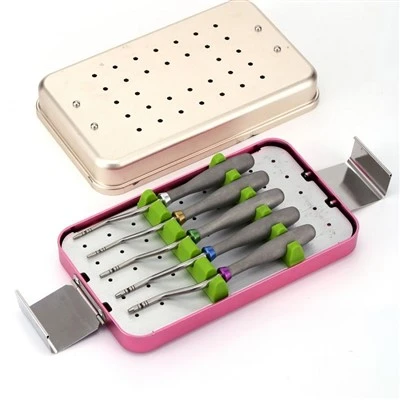

An implant impression coping is a prosthetic transfer component utilized during conventional implant-level and abutment-level impression procedures. It connects directly to an implant or restorative interface to provide reference landmarks that reproduce three-dimensional position, orientation, and spatial angulation in a working master cast.
Successful impression transfer depends on the precise harmonization of connection geometry, platform diameter, transfer methodology, and compatible fixation hardware. Visual similarity alone does not establish component compatibility.
Comprehensive Selection Parameters
|
Selection Criterion |
Technical Parameter to Confirm |
|
Implant System |
Original manufacturer, system name, and specific model line. |
|
Connection Geometry |
Internal conical, internal hex, external hex, tri-channel, or proprietary interface. |
|
Platform & Diameter |
Exact restorative platform size and color-coding designation (if applicable). |
|
Impression Technique |
Open-tray (direct) or closed-tray (indirect). |
|
Connection Level |
Implant-level or specific prosthetic abutment-level (e.g., MUA). |
|
Component Dimensions |
Overall height, working height, body diameter, and profile characteristics. |
|
Fixation Hardware |
Guide pin or retention screw thread pitch, length, and driver interface. |
Clinical Workflow Integration
The clinical impression procedure follows a structured sequence to minimize rotational misfit and dimensional distortion:
Interface Verification: Ensure the implant or abutment platform is free of soft tissue debris, cement, or provisional resin remnants.
Seating Confirmation: Engage the impression coping manually, followed by tactile and visual verification to ensure a zero-gap, flush seat.
Fastener Engagement: Hand-tighten or torque the dedicated guide pin or screw according to manufacturer specifications to eliminate micromotion.
Impression Material Injection: Light-body impression material is syringed around the coping contours, followed by tray seating with heavy-body or putty material.
Retrieval & Lab Transfer: Execute the pick-up (open tray) or transfer (closed tray) sequence, followed by secure attachment of the corresponding laboratory analog prior to master cast pouring.
Manufacturing & Quality Standards
Material Integrity: Produced from certified biocompatible alloys (such as medical-grade titanium Grade 5 / Ti-6Al-4V ELI and high-strength stainless steel) with material test records.
Dimensional Accuracy: Critical mating surfaces and screw threads undergo optical and contact measurement inspections to ensure tactile engagement with original fixtures.
Surface Conditioning: Surface textures are optimized to enhance impression material retention without compromising tissue health or handling safety.
Packaging Status: Delivered in protective, contamination-free packaging (available in non-sterile configurations for autoclaving or pre-sterilized formats as specified).
Troubleshooting & Common Clinical Pitfalls
Even with correct component selection, procedural errors during the transfer stage can lead to master model distortion or prosthesis misfit:
Rotational Misfit (Incomplete Seating): Soft tissue overgrowth or hidden bone debris trapped under the platform flange prevents full seating, creating micro-gaps that propagate to the final crown.
Over-Tightening of Guide Pins: Excessive torque during closed-tray or open-tray seating can strip internal threads or distort the delicate hexagonal or conical interface of the implant fixture.
Material Tear or Pull-Away: Inadequate setting time or premature tray removal can cause elastic impression materials (such as polyether or heavy polyvinyl siloxane) to tear around the coping undercuts, ruining dimensional fidelity.
Sterilization, Reusability, and Lifecycle Protocols
Maintaining structural integrity across multiple clinical cycles requires strict adherence to handling protocols:
Pre-Use Processing: Non-sterile components must undergo ultrasonic cleaning, rinsing, and steam autoclaving prior to clinical introduction.
Component Wear Inspection: Inspect guide pins and impression copings under magnification periodically for thread wear, rounding of hexagonal flats, or scratching on conical sealing surfaces.
Single-Use vs. Multi-Use Policy: While certain robust metallic impression copings are designed for multi-cycle sterilization and reuse, any component exhibiting thread fatigue, deformation, or compromised retention must be immediately retired to protect clinical accuracy.
Frequently Asked Questions
Hot Tags: dental implant impression coping, China dental implant impression coping manufacturers, suppliers, Bone Graft Collect, Bone Trimming Pineapple Bur, dental handpiece unit, Handpiece Screwdrivers, Sealing Material Extractor, Titanium Mesh Membrane